
Forty-plus European founders working on the practical, technical and commercial answers to our climate and nature challenges.
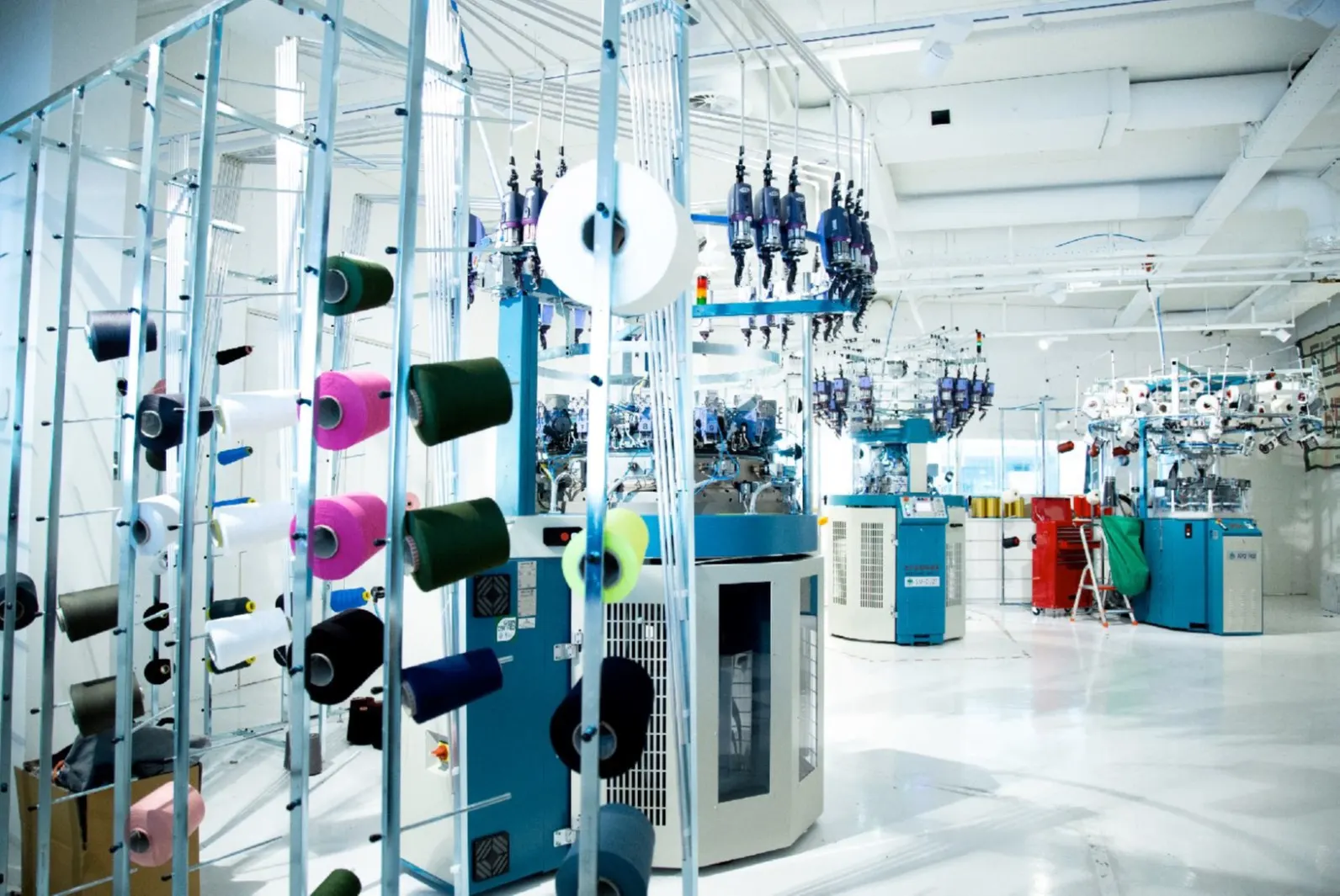
Knitting machines and yarn spools at BYBORRE's textile innovation studio

15 of these companies are early-stage spin-offs backed through our TTT Green Tech fund. Learn more about TTT →

Companies marked “Exit” have been sold or were discontinued. Read some of the exit highlights →

Mobility · Since 2026

VÆRIDION

VÆRIDION is transforming regional air travel with the Microliner, a 100% electric aircraft designed to provide sustainable and cost-efficient air transport. Serving both passenger and cargo missions, the aircraft is intended for scheduled, semi-scheduled and charter operations, enabling flexible deployment across a broad spectrum of mobility and logistics use cases.

Visit website ↗

Mobility · Since 2026

CEYAS

CEYAS automates the movement of semi-trailers between parking zones and loading docks on logistics yards. Its electric automated vehicles pick up any standard trailer, navigate mixed traffic using cameras, lidar and centimetre-precise positioning, and are dispatched by a fleet management system that supports remote operators. Using light electric vehicles for these short, repetitive moves reduces emissions and noise across the yard.

Visit website ↗

Industry · Since 2026

Foamlab

Foamlab develops bio-based foams made from bacterial cellulose, grown by microorganisms through fermentation. By controlling fermentation and drying, it tunes the density, softness and rigidity of its foams for uses such as protective packaging, insulation and textiles, without synthetic binders or petrochemical inputs. The foams are compostable, offering an alternative to fossil-based plastic foams that persist in landfills and ecosystems.

Visit website ↗

Energy · Since 2026

HR Energy

HR Energy makes PVT systems that combine solar panels and heat pump technology for homes and buildings. The roof panels generate electricity and also capture heat from the sun and outside air, which an indoor heat pump uses for heating, cooling and hot water, without an outdoor unit. Using energy generated on their own roof, households and businesses can heat with much less natural gas, or none at all.

Visit website ↗

Industry · Since 2025

Coolsem

CoolSem Technologies develops WaLTIS, a wafer-level technology that helps semiconductor and photonic chips run cooler. It replaces a chip's original substrate with an engineered carrier that conducts heat up to 15 times better and reduces thermal stress, for uses such as RF base stations, satellite terminals, photonics and power conversion. Better heat removal can cut energy waste and extend chip lifetime, supporting more efficient and longer-lasting electronics.

Visit website ↗

Industry · Since 2025

Resoniks

RESONIKS builds AI-powered acoustic testing systems that detect internal and surface defects in manufactured parts such as castings. Its QCFlex unit integrates into production lines, learns each part's acoustic fingerprint from reference parts and gives a pass/fail result in seconds, without radiation, chemicals or operator analysis. Catching defects early, before further machining, reduces scrap and the energy and materials spent on faulty parts.

Visit website ↗

Food & Ag · Since 2025

Foodforecast

Foodforecast provides AI-based demand and production forecasting for ultra-fresh food, such as baked goods with a shelf life of hours to a day. Bakery chains, food retailers and food service operators use it to automate ordering and production planning per store, and its AI assistant ARTI points out waste and missed sales in their data. More accurate planning means less fresh food is produced only to be thrown away.

Visit website ↗

Energy · Since 2025

RABLE

RABLE supplies self-supporting mounting systems for solar panels on flat roofs, including roofs too weak for conventional ballasted systems. The design needs no ballast and, based on wind-tunnel research, no anchoring, so panels can be installed without roof renovation; RABLE works with installers, EPC contractors, wholesalers and building owners. This makes it possible to generate solar power on roofs that would otherwise stay unused.

Visit website ↗

Energy · Since 2025

MuTech

MuTech develops technology and services to reduce wind turbine noise, building on a decade of TU Delft research. Its MuteSkin add-on uses controlled permeability at the blade's trailing edge, typically the main source of turbine noise, and fits new and existing turbines; its Acoustic Insights service identifies noise sources through advanced measurements. Noise rules often force turbines to run below capacity, so quieter blades can let them produce more renewable energy.

Visit website ↗

Food & Ag · Since 2025

Scope Biosciences

Scope Biosciences develops scopeDx, CRISPR-Cas-based molecular tests that detect plant pathogens on site. Growers can test crude samples in the field without a laboratory and get results in under an hour, with sensitivity comparable to PCR, so diseases can be found before symptoms appear. Earlier detection helps prevent outbreaks and crop losses, and avoids unnecessary use of chemicals, water and other inputs.

Visit website ↗

Industry · Since 2024

TEEPTRAK

TEEPTRAK provides real-time monitoring of machine performance (OEE) for manufacturing plants. Plug-and-play sensors connect to machines of any make or age and record stops, slow cycles and scrap automatically, while operators log the cause on the spot and managers compare lines and plants in one dashboard. Getting more output and less scrap from existing equipment can lower the energy and materials used per product.

Visit website ↗

Food & Ag · Since 2024

Thermeleon

Thermeleon makes the Warmtebatterij (heat battery), a thermal storage product for greenhouses. It stores surplus heat during the day and releases it at night, and is tailored with each grower to the greenhouse size, type and crop. This reduces natural gas use and the need for window ventilation, which keeps CO2 for crop growth inside the greenhouse and evens out temperature extremes.

Visit website ↗

Mobility · Since 2024

RideTandem

RideTandem runs fully managed, technology-enabled shuttle bus services for employers, recruitment agencies, schools, colleges and universities. Passengers book seats in an app and track the vehicle live, while organisations get data on usage, including for sites poorly served by public transport. Shared shuttles replace individual car journeys, which lowers commuting emissions and helps organisations meet their sustainability targets.

Visit website ↗

Energy · Since 2024

Friday Energy

Friday Energy supplies businesses with battery storage, smart energy control and direct access to energy markets as one integrated system. It serves farms, industry, commercial property, transport companies and solar and wind parks, storing power when it is cheap and delivering it when it is worth more, while freeing up capacity on congested grid connections. This helps businesses electrify and use more renewable power without waiting years for grid reinforcement.

Visit website ↗

Mobility · Since 2024

Roboat

Roboat develops automation systems for commercial vessels, ranging from crew assistance and automated docking to, step by step, full autonomy. The system combines lidar-based localization, obstacle mapping and fleet data, and sails daily with public transport ferry and city logistics operators in Amsterdam. Smoother manoeuvres and fleet-wide insights help operators save fuel and keep transport over water viable as crews become scarcer.

Visit website ↗

Energy · Since 2024

C1 Connections

C1 Connections has developed the C1 Wedge Connection, a flange connection between wind turbine towers and their foundations that uses wedge-shaped fasteners instead of conventional bolts. The company supplies the fasteners and tools and supports the design and fabrication of the connection for offshore and onshore turbines, with DNV component certification. Because it handles the larger loads of bigger turbines, it can reduce monopile weight and lower the cost of wind energy.

Visit website ↗

Industry · Since 2023

Astrape

Astrape Networks is a European deep-tech company developing Effiniti, a network fabric for data centers that runs on standard Ethernet. Rooted in integrated photonics research at Eindhoven University of Technology, it merges the separate networks for AI computing, storage and management into one self-configuring fabric, from inside a rack to multiple data centers. Fewer networks and fewer electrical-optical conversions can significantly reduce the energy data centers use for networking.

Visit website ↗

Energy · Since 2023

volytica diagnostics

volytica diagnostics makes manufacturer-independent software that monitors the health of battery systems, from electric vehicles and buses to large-scale energy storage. Its algorithms, based on AI and electrochemistry, analyse field data to assess degradation, state of health and safety risks, and predict remaining useful life for operators, fleet owners and insurers. Knowing a battery's real condition helps keep it safe and in service for longer.

Visit website ↗

Mobility · Since 2023

Heex Technologies

Heex Technologies offers a Smart-Data platform that captures only the relevant data from autonomous systems such as robots, autonomous vehicles and industrial machines. Software agents use pre-set event triggers to extract small packages of data at the edge or in the cloud and share them with the engineering and operations teams that need them. Processing, transmitting and storing less data reduces the energy demand of networks and data centers.

Visit website ↗

Energy · Since 2023

Maxem

Maxem provides an energy management platform that brings together EV charging, on-site generation, battery storage and grid connections. Since 2012 it has helped logistics hubs, commercial property owners and other organizations control capacity, peak loads and energy costs, with integrations for more than 50 charge point manufacturers. This allows organizations to electrify their vehicles and equipment within the limits of a congested grid.

Visit website ↗

Industry · Since 2023

Fonontech

FononTech develops Impulse Printing, a technology that prints microscopic 3D electrical connections for electronics manufacturing, from advanced chip packaging to display assembly. A 2022 spin-off of TNO at Holst Centre in Eindhoven, it uses rapid heating to propel inks or pastes onto any substrate, depositing material only where it is needed. As an additive alternative to multi-step lithography, it can substantially reduce the carbon footprint of microelectronics production.

Visit website ↗

Energy · Since 2023

SOLHO

SOLHO designs, builds and operates large solar thermal systems that supply heating and cooling to businesses, including greenhouses, food processors and hotels. Its SPRHOUT system captures and stores solar energy and delivers hot water up to 95°C or chilled water down to 7°C, often under heat-as-a-service contracts. By replacing gas with solar heat, it cuts emissions and fossil fuel dependence in industry and agriculture.

Visit website ↗

Mobility · Since 2022

OTIV

OTIV builds driver assistance, remote control and self-driving technology for rail vehicles, from camera systems for shunting to fully autonomous operation. Its perception systems serve industrial sites, urban rail, railway operators and rolling stock manufacturers, improving safety and efficiency in daily operations. Rail emits far less CO2 than road transport, so making rail operations more cost-efficient helps move goods and people from road to rail.

Visit website ↗

Food & Ag · Since 2022

ChainCraft

ChainCraft makes biobased fatty acids from food residues as an alternative to fossil and palm oil-based ingredients. Using natural, non-GMO fermentation, it supplies ingredients for animal nutrition, food flavours and fragrances, agriculture and chemical derivatives. An independent life cycle assessment in 2024 found up to six times lower global warming impact than conventional crude and palm oil-based alternatives.

Visit website ↗

Energy · Since 2022

Canopus Drilling Solutions

Canopus Drilling Solutions has developed directional steel shot drilling (DSSD), which combines erosive steel shot jets with mechanical drilling to steer the drill bit along curved paths. It can drill long, curved borehole heat exchangers for shallow geothermal and branched multilateral wells for deep geothermal, and the technology has been verified by TNO. Longer and branched wells can increase heat output per installation, making geothermal heating and cooling more viable.

Visit website ↗

Industry · Since 2022

OMRT

OMRT builds software for real estate development that brings design, cost and procurement together in one digital environment. The platform automatically generates thousands of design variants, scores them against a developer's constraints and local regulations, and lets design, finance and construction teams work from the same data. Settling key design choices early, with building physics calculated in the platform, helps developers avoid rework and take sustainability into account from the start.

Visit website ↗

Energy · Since 2022

Zero Friction

Zero Friction provides billing software for district and communal heating and cooling suppliers. Its SaaS platform automates the meter-to-cash process, from invoicing to payment follow-up, and includes a self-service portal where end customers arrange move-ins, move-outs and advance payments. Heat networks can supply buildings with renewable and residual heat, and simpler, more transparent billing helps operators run them affordably and keep the trust of their customers.

Visit website ↗

Industry · Since 2022

Magneto

Magneto develops magnetocaloric heat exchangers, the core component of heat pumps that heat and cool without refrigerant gases or fossil fuels. Its patented, rare-earth-free material heats up in a magnetic field and cools when the field is removed, and is 3D-printed into heat exchangers for temperatures from -80°C to 200°C. The company reports up to 30% higher efficiency than conventional vapour-compression systems, without the harmful refrigerants those systems use.

Visit website ↗

Energy · Since 2022

Whiffle

Whiffle produces high-resolution weather forecasts and simulations on a very local scale. Its model uses Large-Eddy Simulation and powerful computing to resolve wind flows, wakes and turbulence, serving renewable energy developers and operators with power production forecasts, wind resource assessments and the Whiffle Wind web app. More accurate forecasts help renewable energy producers match supply to demand, reduce imbalance costs and choose better sites for wind turbines.

Visit website ↗

Industry · Since 2022

Pelagen

Pelagen makes leather from engineered skin tissue grown from cells, without using animals. Building on decades of skin-engineering research at Leiden University Medical Center, it cultivates living tissue and turns it into leather for fashion, automotive, interiors and other applications. The aim is a material comparable to conventional leather, without the environmental and animal-welfare impact of producing leather from livestock.

Visit website ↗

Industry · Since 2021

Torwash

Torwash, a spin-off of TNO, has developed patented processes for treating sewage sludge, wet biomass and mixed plastics. For sewage sludge, its energy-neutral dewatering yields solid biofuel and biogas and recovers phosphate; other versions convert wet agricultural residues into biofuel and break bioplastics such as PLA down into reusable monomers. This turns streams that are now incinerated or landfilled into usable raw materials, with a first commercial wastewater treatment system targeted for 2028.

Visit website ↗

Industry · Since 2021

Vertoro

Vertoro produces Goldilocks, a bio-based crude oil made from waste woody biomass or technical lignin. Using a patented thermochemical process, the feedstock is mixed with a solvent and heated, giving a liquid platform product that can be turned into materials, chemicals, fuels and fuel additives such as marine fuel. As a renewable alternative to fossil crude oil, it can help industries lower their carbon footprint using their existing equipment.

Visit website ↗

Industry · Since 2021

Nature's Principles

Nature's Principles, a TU Delft spin-off, is developing a fermentation process to produce lactic acid, a building block for bioplastics such as PLA and other bio-based chemicals. Its patented mixed-culture fermentation works directly on raw sugar beet juice, skipping the sterilisation and refining steps that conventional sugar-based processes require. This can make lactic acid cheaper and less energy-intensive to produce, supporting bio-based alternatives to oil-based chemicals.

Visit website ↗

Industry · Since 2021

SusPhos

SusPhos has developed a technology that recovers phosphate from phosphate-rich waste such as sewage sludge ash and meat and bone meal. Its zero-waste process recovers over 80% of the phosphate and turns the rest of the ash into usable products, including a low-carbon phosphate fertiliser and a cement replacer, with a first full-scale plant planned in Moerdijk. Recycled phosphate reduces reliance on mined rock phosphate and lowers the CO2 footprint of fertiliser and cement.

Visit website ↗

Food & Ag · Since 2021

Time-travelling Milkman

Time-travelling Milkman, now operating as TTM Ingredients, makes Oleocream, a cream ingredient for plant-based food made from sunflower oleosomes. Oleosomes are the natural fat droplets found in seeds; TTM extracts them so manufacturers can give plant-based cream cheese, ice cream, drinks and sauces a dairy-like creaminess without added emulsifiers or stabilisers. Made from European sunflower seeds, it helps plant-based products replace dairy cream and tropical fats.

Visit website ↗

Energy · Since 2021

Jungle

Jungle builds Canopy, AI software that monitors the condition and performance of wind and solar assets. Using existing SCADA and sensor data, its machine learning models learn how each asset should behave under changing operating and weather conditions and flag abnormal behaviour before fixed alarms do. Catching faults and underperformance early helps operators avoid downtime and produce more renewable electricity from the turbines and solar parks they already have.

Visit website ↗

Food & Ag · Since 2021

OneThird

OneThird develops technology to assess quality and predict the shelf life of fresh produce such as avocados, strawberries and blueberries. Its AI-powered portable scanners and smartphone imaging feed a cloud platform that gives growers, distributors and retailers real-time quality insights, so each batch can go to the right place at the right time. Better shelf-life predictions help prevent fresh produce from being thrown away, a large share of all food wasted.

Visit website ↗

Energy · Since 2021

E-magy

E-magy makes nanoporous silicon material for the anodes of lithium-ion batteries. The material enables silicon-dominant anodes, fits existing battery production lines and is produced in the company's own facility near Amsterdam for battery and automotive manufacturers. Batteries with higher energy density and faster charging make electric vehicles more practical, supporting the shift away from fossil-fuel transport.

Visit website ↗

Food & Ag · Since 2020

SAIA Agrobotics

SAIA Agrobotics develops an automated cultivation system for greenhouse tomatoes. Plants grow without substrate on mist and move to an automation zone, where each plant is scanned, its leaves pruned and its trusses harvested by robots, cutting manual crop work for growers. Because plants stay productive without a yearly crop change, the same greenhouse area can keep producing for more weeks each year.

Visit website ↗

Food & Ag · Since 2020

FUL Foods

FUL Foods makes FUL BLU, a natural blue colour extracted from spirulina, a microalgae. Food, beverage, supplement and foodservice businesses use it as an alternative to synthetic, petroleum-based colours. The spirulina is grown in closed photobioreactors that use biogenic CO2 as their main feedstock, recycle 85% of the water used and need no arable land.

Visit website ↗

Food & Ag · Since 2020Exit

Pieter Pot

Pieter Pot is an online supermarket in the Netherlands and Belgium that delivers groceries without single-use packaging. Products arrive in deposit jars, and customers hand their empty jars back to the driver at their next delivery, after which they are washed and reused. Reusable jars replace the single-use packaging that normally comes with groceries, reducing packaging waste.

Visit website ↗

Industry · Since 2020

BYBORRE

BYBORRE is an Amsterdam textile innovation company that makes custom knitted textiles for interiors, mobility and fashion. Brands and designers create textiles on its digital platform, which are knitted on demand, with sampling in its Amsterdam Knitlab and bulk production by European partners. Producing only what is ordered avoids overproduction and deadstock, and the company publishes life cycle data, including a third-party verified Environmental Product Declaration.

Visit website ↗

Food & Ag · Since 2020Exit

FUMI Ingredients

FUMI Ingredients is a Wageningen University & Research spin-off that developed an egg white replacer produced from natural, non-GMO microorganisms. The ingredient is aimed at food producers, in particular makers of plant-based meat alternatives that still use egg white to bind their products. Replacing an animal-based ingredient with one made by microorganisms helps make these products fully vegan and reduces reliance on egg production.

Visit website ↗

Mobility · Since 2020Exit

ViriCiti

ViriCiti, acquired by ChargePoint in 2021, developed an online monitoring platform for electric buses, trucks and other commercial fleets. It gave fleet operators and vehicle manufacturers insight into energy use, batteries, charging and maintenance, from public transit agencies to delivery fleets. By making electric fleets easier to run and expand, it helped transport operators switch from combustion engines to zero-emission vehicles.

Visit website ↗

Mobility · Since 2020Exit

We4Sea

We4Sea provides performance monitoring for ships that works without installing hardware on board. Using a digital twin of each vessel, it reports performance and fuel efficiency in near real time for charterers and ship owners, and handles emission reporting for schemes such as EU-MRV, IMO-DCS and CII. Better insight into fuel consumption helps shipping companies reduce fuel use and the emissions that come with it.

Visit website ↗

Mobility · Since 2020Exit

SupplyStack

SupplyStack developed a transport management system that helps shippers and forwarders plan, assign and execute their freight transport. Its software covered multimodal and part-load shipments, and the company was acquired by logistics software company Transporeon in 2022. Automating and optimising how transport is planned helps make freight movements more efficient, which can lower both costs and emissions.

Visit website ↗

Mobility · Since 2020Exit

Mobian

Mobian runs MobiHubs: parking locations on the edge of Dutch cities, such as Amsterdam, Rotterdam and The Hague, where visitors park and continue their trip by shared bike or public transport. Through its app, users book a parking spot together with a bike, taxi or public transport ticket, often in garages of partners such as APCOA. Moving the last part of the journey out of the car helps reduce car traffic in city centres.

Visit website ↗

Mobility · Since 2020Exit

GRASP

GRASP Innovations developed sensors and software that automate airport security checkpoints. Its radar-based systems and data tools take over repetitive monitoring tasks, such as access control and tray return lanes, and give airports and security companies insight into checkpoint performance and staff planning. Making better use of existing security lanes and staff can help airports handle passenger flows with the infrastructure they already have.

Visit website ↗

Mobility · Since 2020

Razor Secure

RazorSecure builds cyber security products for railways, including an on-board firewall, intrusion detection, secure maintenance access and asset monitoring. It serves train operators, infrastructure managers, train builders and system suppliers, protecting both new and legacy fleets and helping them meet standards such as NIS2 and TS 50701. Keeping increasingly digital trains and signalling secure supports reliable rail services, one of the lower-carbon ways to move people.

Visit website ↗

Industry · Since 2019Exit

The Renewal Workshop

The Renewal Workshop collects, repairs and resells returned apparel and textile products on behalf of fashion and lifestyle brands. Its renewal system restores items for resale as second-life products, and logistics company Bleckmann acquired the business in early 2022. Renewing an existing product instead of making a new one cuts its carbon emissions by about half on average, according to its own research.

Visit website ↗

Mobility · Since 2019Exit

Aiir Innovations

AIIR Innovations makes AI software that analyses borescope inspection footage of aircraft engines and flags defects such as cracks and wear. Airlines, lessors, engine manufacturers and maintenance providers use it to review inspections, generate reports and share findings; Pratt & Whitney acquired the company in 2026. Faster, more consistent engine inspections support smarter maintenance and more efficient use of aircraft assets.

Visit website ↗

Industry · Since 2019Exit

Foamplant

Foamplant developed biodegradable and circular foams, including Growfoam, a peat-free substrate for growing young plants from seed or cuttings, and Moorefoam, a recyclable foam for bedding and furniture. Growfoam's mix of biopolymers and natural additives lets its air and water capacity be tuned to each crop; vertical farming company Growy acquired Foamplant in 2025. Replacing peat and conventional foams with biodegradable or recyclable alternatives reduces the environmental footprint of horticulture and foam products.

Visit website ↗

Food & Ag · Since 2019Exit

30MHz

30MHz combines wireless crop and climate sensors with a data platform that gives greenhouse growers real-time dashboards, alerts and AI-based advice. Growers and advisors use it to monitor climate and crops, fine-tune irrigation and energy use, and manage multiple sites, linked with common greenhouse climate computers. Better data helps growers use water, gas and electricity more precisely, cutting waste while keeping yields stable.

Visit website ↗

Since 2018Exit

Changing Health

Changing Health offers digital behaviour change programmes that help people prevent, manage and in some cases reverse type 2 diabetes, and lose weight. It combines app-based learning and digital nudges with telecoaching, and is offered through health services and insurers such as NHS organisations and Menzis. Its impact lies in health: lasting lifestyle changes help people avoid or improve a widespread chronic condition.

Visit website ↗

Mobility · Since 2018

C Teleport

C Teleport is a travel booking and management platform for companies whose travel plans change often, such as in shipping, aviation and energy. Teams book flights, hotels and trains in one place, change or cancel trips instantly, set automated travel policies and connect it to HR, finance and ERP systems. Central, real-time data on every booking gives companies a clear picture of their travel, a basis for managing its cost and climate footprint.

Visit website ↗

Industry · Since 2017Exit

CEVAP Technology

CEVAP Technology developed a thermal water treatment system, driven by waste heat, for difficult wastewater streams and small-scale drinking water production. Its cartridge-based evaporator was designed for low to medium volume streams, initially in the biomass and chemical industries, and reduces the need for chemical cleaning and pre-treatment. Using heat that would otherwise go unused, it aimed to make cleaning and reusing smaller industrial water streams affordable and sustainable.

Visit website ↗

Industry · Since 2017

Kriya Materials

Kriya Materials develops and produces PFAS-free optical coatings and nanoparticle dispersions, such as anti-reflection, hard-coat, anti-soiling and heat-blocking layers. Rooted in Philips research and based in Nuth, the Netherlands, it supplies manufacturers of displays, automotive glazing, solar panels, building glazing and photonics components. Its coatings let more light into solar panels and keep solar heat out of cars and buildings, reducing cooling energy while avoiding PFAS chemicals.

Visit website ↗

Industry · Since 2017

Green Basilisk

Basilisk makes self-healing concrete products: a healing agent added to new concrete, plus a repair mortar and a liquid repair agent for existing structures. Limestone-producing bacteria in the products become active when water enters a crack and seal it, currently up to 0.8 mm, protecting against leakage and reinforcement corrosion. Longer-lasting, watertight concrete needs less reinforcement steel, membranes and repair work, which the company says lowers the CO2 footprint by 30% to 50%.

Visit website ↗

Food & Ag · Since 2016Exit

NutriLeads

NutriLeads developed Benicaros, a plant-based prebiotic fibre extracted from carrot pomace that clinical studies show supports gut and immune health at a low daily dose. It supplies the ingredient to makers of dietary supplements, functional foods and beverages; in 2026 ingredients company Ingredion acquired Benicaros. This carrot pulp, left over from juice production and otherwise wasted or at best used as animal feed, is upcycled into a health ingredient.

Visit website ↗

Mobility · Since 2015Exit

Undagrid

Undagrid makes AI software that turns IoT devices, with a focus on Bluetooth Low Energy, into real-time tracking and monitoring of movable assets. It focuses on aviation, where airports and service providers use it to locate baggage carts, ground support equipment, wheelchairs, catering trolleys and maintenance tools. Knowing where equipment is and how it is used helps operators make better use of existing assets before buying more, and cut wasteful handling.

Visit website ↗

Food & Ag · Since 2015Exit

GreenA

GreenA develops Squall, a patented, biodegradable spray adjuvant based on polyethylene oxide that farmers add to their crop protection tank mix. It narrows the droplet size distribution, so more of the spray lands on and sticks to the crop, with less drift and better rain fastness. Keeping crop protection products on the target crop reduces losses to surrounding soil, water and nature, and helps farmers use less product and water.

Visit website ↗

Energy · Since 2014Exit

HeatMatrix

Heat Matrix designs and delivers turnkey heat recovery systems that capture heat from industrial flue gases, baking fumes and exhaust air. Building on its own corrosion-resistant polymer heat exchanger, it serves food and beverage, bakery, manufacturing and chemical plants, including sites with corrosive or heavily polluted flue gases. Reusing heat that would otherwise be lost lowers a plant's energy use and CO2 emissions.

Visit website ↗

Mobility · Since 2014Exit

EyeOnAir

Eye on Air developed explosive trace detection equipment based on a sensitive ion mobility spectrometry sensor, including a handheld detector. The technology was designed to screen airport passengers and luggage quickly for minute traces of explosives, and was developed in close cooperation with Schiphol. The same sensor technology can also detect volatile substances in the air, with possible uses such as finding pipeline leaks or monitoring air contaminants.

Visit website ↗

Mobility · Since 2014Exit

Snocom

Snocom makes the Snowcuber, a snow removal machine that compresses the snow it collects for faster and more controlled clearing. It is used to keep airport aprons, city streets, ports and logistics centres clear during the snow season. According to the company, compression halves the snow volume and can cut truck movements by up to 50%, reducing fuel use and CO2 emissions from snow removal.

Visit website ↗

Food & Ag · Since 2014Exit

Mastiline

Mastiline developed a sensor system for the early detection of mastitis, an udder infection that accounts for a large share of herd health costs on dairy farms. The system measures in-line during milking, can be integrated into conventional milking systems and robots, and removes the need for external lab tests. Detecting infections at the subclinical stage helps keep cows healthy and productive and reduces the use of antibiotics.

Visit website ↗

Mobility · Since 2014

AirFi

AirFi makes portable wireless inflight entertainment systems: a compact, battery-powered box that streams content to passengers' own phones, tablets and laptops. The box fits in an overhead locker and needs no aircraft modification, and AirFi also offers onboard sales software and satellite connectivity to airline and rail operators. Using passengers' own devices and a unit of about 1.3 kg avoids the extra weight and hardware of seat-back screen systems.

Visit website ↗

Energy · Since 2013Exit

Vandebron

Vandebron is a Dutch energy supplier that lets customers buy renewable electricity directly from local producers, such as farmers with a wind turbine. Through its online marketplace, consumers choose their own wind, solar or bio-energy producer. By making the market for renewable energy more transparent and giving producers extra income, Vandebron supports investment in new renewable generation; since 2019 it has been part of Essent.

Visit website ↗

Food & Ag · Since 2013Exit

Meatless

Meatless produces plant-based textured ingredients from raw materials such as rice, wheat, fava beans, peas and lupins. Its hydrocolloid-based process creates neutral-tasting textures that food manufacturers use, frozen or dried, to improve the texture, mouthfeel and stability of meat and fish alternatives. Better alternatives make it easier to replace animal protein, which has a larger environmental footprint; Meatless was acquired by BENEO, part of Südzucker, in 2022.

Visit website ↗

Mobility · Since 2012Exit

Robin Radar

Robin Radar, a TNO spin-off founded in 2010, builds radar systems that detect, track and classify birds and drones. Its 360-degree 3D radars are used at airports to reduce bird strikes and at wind farms and other sites to monitor bird activity; since 2024 the company has been owned by Dutch investor Parcom. Accurate data on bird movements supports safer aviation and helps wind energy projects take wildlife into account.

Visit website ↗

Energy · Since 2012Exit

Ampyx Power

Ampyx Power developed an airborne wind energy system in which an autonomous, tethered aircraft, the PowerPlane, flies crosswind loops and pulls a tether that drives a generator on the ground. The aircraft took off and landed automatically from a platform, and the company worked towards megawatt-scale systems. Its first commercial systems were intended to repower first-generation offshore wind farms by reusing their existing foundations to generate renewable electricity.

Visit website ↗

Mobility · Since 2011Exit

Multi Pilot Systems

Multi Pilot Simulations (MPS) designs, builds, installs and maintains type-specific fixed-base flight simulators for Airbus, Boeing and Embraer aircraft. Its training devices serve airlines, training centres and universities, and are designed for certification under EASA, FAA and local aviation authority standards. According to the company, its simulators use much less energy than full-motion systems, and its production runs on solar power and reuses parts from retired aircraft.

Visit website ↗

Mobility · Since 2011Exit

Casper

Casper builds cloud-based software that turns air traffic movement data into analytics and visualisations for airports. Its tools cover noise monitoring, community engagement, complaint management and flight operations monitoring, and have been used by around 60 airports in 15 countries. Clear data on noise and flight paths helps airports manage their environmental impact on surrounding communities; in 2025 the company was acquired by Ideagen.

Visit website ↗

Food & Ag · Since 2010Exit

Protix

Protix breeds black soldier flies and processes the larvae into insect-based ingredients for animal feed and plant care. The insects are reared in an automated, data-driven process on low-grade organic waste streams, and the ingredients are used in feed for pigs, poultry, fish and pets. Turning food waste into protein offers an alternative to feed ingredients such as fishmeal and soy, which are linked to overfishing and deforestation.

Visit website ↗