With the TTT Green Tech fund, part of SHIFT IV, we invest in disruptive technologies developed at Dutch knowledge institutes.
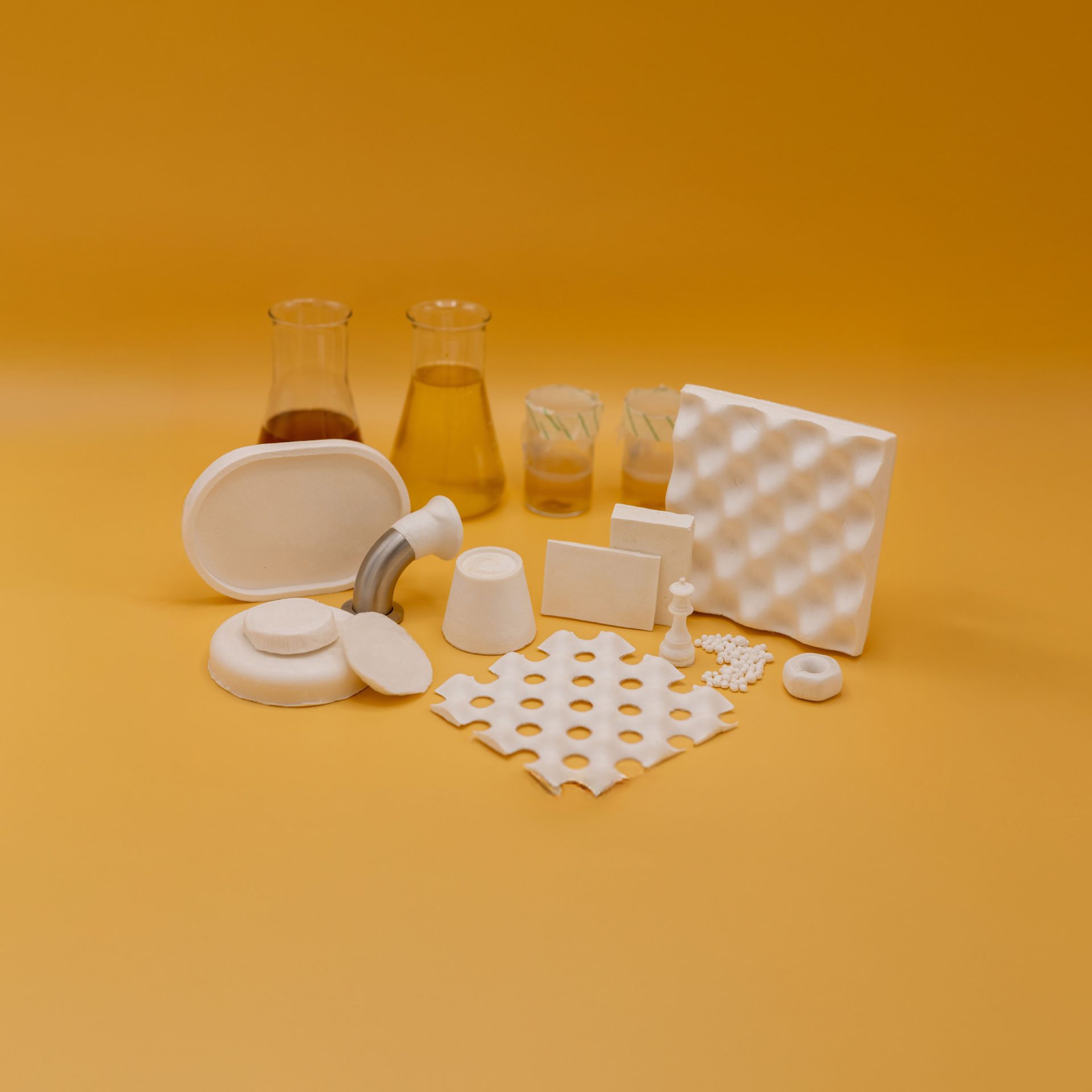
Foamlab, a TU Delft spin-off backed through TTT, working on bio-based foams
€300–500k
Initial investment
Pre-seed
Proof of concept stage
NL
Spin-offs from Dutch research

About TTT

From the lab to a company

Thematic Technology Transfer (TTT) is a national programme, supported by the Netherlands Enterprise Agency (RVO), that helps researchers bring promising technology to market. Many ideas never leave the lab because there is no funding for the very first steps. TTT closes that gap.

TTT Green Tech focuses on technology for climate and nature. We work together with Dutch universities and TNO: the knowledge institutions scout and validate research, and we invest in and support the spin-offs that come out of it.

Our partners

  • TU Delft
  • Eindhoven University of Technology
  • University of Twente
  • Wageningen University & Research
  • TNO
  • Utrecht University
  • University of Groningen
  • Radboud University

Five green tech themes

Circular

Water

Agri & Food

Biobased

Energy

How it works

  1. 01

    Validate

    Researchers work with the tech transfer office of their knowledge institution to protect their IP, build a team and validate the market. A TTT proof of concept voucher can fund this phase.

  2. 02

    Invest

    Once a spin-off is ready, the TTT Green Tech fund, managed by SHIFT Invest, invests. We screen, give feedback on team, business development, scalability and IP, and make the investment.

  3. 03

    Grow

    After the investment we stay hands-on, and help with the next round through SHIFT's network of co-investors, regional development agencies and our own later-stage funds.

The TTT portfolio

Mobility · Since 2026

CEYAS

CEYAS automates the movement of semi-trailers between parking zones and loading docks on logistics yards. Its electric automated vehicles pick up any standard trailer, navigate mixed traffic using cameras, lidar and centimetre-precise positioning, and are dispatched by a fleet management system that supports remote operators. Using light electric vehicles for these short, repetitive moves reduces emissions and noise across the yard.

Visit website ↗

Industry · Since 2026

Foamlab

Foamlab develops bio-based foams made from bacterial cellulose, grown by microorganisms through fermentation. By controlling fermentation and drying, it tunes the density, softness and rigidity of its foams for uses such as protective packaging, insulation and textiles, without synthetic binders or petrochemical inputs. The foams are compostable, offering an alternative to fossil-based plastic foams that persist in landfills and ecosystems.

Visit website ↗

Industry · Since 2025

Coolsem

CoolSem Technologies develops WaLTIS, a wafer-level technology that helps semiconductor and photonic chips run cooler. It replaces a chip's original substrate with an engineered carrier that conducts heat up to 15 times better and reduces thermal stress, for uses such as RF base stations, satellite terminals, photonics and power conversion. Better heat removal can cut energy waste and extend chip lifetime, supporting more efficient and longer-lasting electronics.

Visit website ↗

Food & Ag · Since 2024

Thermeleon

Thermeleon makes the Warmtebatterij (heat battery), a thermal storage product for greenhouses. It stores surplus heat during the day and releases it at night, and is tailored with each grower to the greenhouse size, type and crop. This reduces natural gas use and the need for window ventilation, which keeps CO2 for crop growth inside the greenhouse and evens out temperature extremes.

Visit website ↗

Mobility · Since 2024

Roboat

Roboat develops automation systems for commercial vessels, ranging from crew assistance and automated docking to, step by step, full autonomy. The system combines lidar-based localization, obstacle mapping and fleet data, and sails daily with public transport ferry and city logistics operators in Amsterdam. Smoother manoeuvres and fleet-wide insights help operators save fuel and keep transport over water viable as crews become scarcer.

Visit website ↗

Industry · Since 2023

Astrape

Astrape Networks is a European deep-tech company developing Effiniti, a network fabric for data centers that runs on standard Ethernet. Rooted in integrated photonics research at Eindhoven University of Technology, it merges the separate networks for AI computing, storage and management into one self-configuring fabric, from inside a rack to multiple data centers. Fewer networks and fewer electrical-optical conversions can significantly reduce the energy data centers use for networking.

Visit website ↗

Energy · Since 2023

SOLHO

SOLHO designs, builds and operates large solar thermal systems that supply heating and cooling to businesses, including greenhouses, food processors and hotels. Its SPRHOUT system captures and stores solar energy and delivers hot water up to 95°C or chilled water down to 7°C, often under heat-as-a-service contracts. By replacing gas with solar heat, it cuts emissions and fossil fuel dependence in industry and agriculture.

Visit website ↗

Industry · Since 2022

Magneto

Magneto develops magnetocaloric heat exchangers, the core component of heat pumps that heat and cool without refrigerant gases or fossil fuels. Its patented, rare-earth-free material heats up in a magnetic field and cools when the field is removed, and is 3D-printed into heat exchangers for temperatures from -80°C to 200°C. The company reports up to 30% higher efficiency than conventional vapour-compression systems, without the harmful refrigerants those systems use.

Visit website ↗

Industry · Since 2022

Pelagen

Pelagen makes leather from engineered skin tissue grown from cells, without using animals. Building on decades of skin-engineering research at Leiden University Medical Center, it cultivates living tissue and turns it into leather for fashion, automotive, interiors and other applications. The aim is a material comparable to conventional leather, without the environmental and animal-welfare impact of producing leather from livestock.

Visit website ↗

Industry · Since 2021

Torwash

Torwash, a spin-off of TNO, has developed patented processes for treating sewage sludge, wet biomass and mixed plastics. For sewage sludge, its energy-neutral dewatering yields solid biofuel and biogas and recovers phosphate; other versions convert wet agricultural residues into biofuel and break bioplastics such as PLA down into reusable monomers. This turns streams that are now incinerated or landfilled into usable raw materials, with a first commercial wastewater treatment system targeted for 2028.

Visit website ↗

Industry · Since 2021

Nature's Principles

Nature's Principles, a TU Delft spin-off, is developing a fermentation process to produce lactic acid, a building block for bioplastics such as PLA and other bio-based chemicals. Its patented mixed-culture fermentation works directly on raw sugar beet juice, skipping the sterilisation and refining steps that conventional sugar-based processes require. This can make lactic acid cheaper and less energy-intensive to produce, supporting bio-based alternatives to oil-based chemicals.

Visit website ↗

Industry · Since 2021

SusPhos

SusPhos has developed a technology that recovers phosphate from phosphate-rich waste such as sewage sludge ash and meat and bone meal. Its zero-waste process recovers over 80% of the phosphate and turns the rest of the ash into usable products, including a low-carbon phosphate fertiliser and a cement replacer, with a first full-scale plant planned in Moerdijk. Recycled phosphate reduces reliance on mined rock phosphate and lowers the CO2 footprint of fertiliser and cement.

Visit website ↗

Food & Ag · Since 2021

Time-travelling Milkman

Time-travelling Milkman, now operating as TTM Ingredients, makes Oleocream, a cream ingredient for plant-based food made from sunflower oleosomes. Oleosomes are the natural fat droplets found in seeds; TTM extracts them so manufacturers can give plant-based cream cheese, ice cream, drinks and sauces a dairy-like creaminess without added emulsifiers or stabilisers. Made from European sunflower seeds, it helps plant-based products replace dairy cream and tropical fats.

Visit website ↗

Food & Ag · Since 2020

SAIA Agrobotics

SAIA Agrobotics develops an automated cultivation system for greenhouse tomatoes. Plants grow without substrate on mist and move to an automation zone, where each plant is scanned, its leaves pruned and its trusses harvested by robots, cutting manual crop work for growers. Because plants stay productive without a yearly crop change, the same greenhouse area can keep producing for more weeks each year.

Visit website ↗

Food & Ag · Since 2020

FUL Foods

FUL Foods makes FUL BLU, a natural blue colour extracted from spirulina, a microalgae. Food, beverage, supplement and foodservice businesses use it as an alternative to synthetic, petroleum-based colours. The spirulina is grown in closed photobioreactors that use biogenic CO2 as their main feedstock, recycle 85% of the water used and need no arable land.

Visit website ↗

What we look for

  1. Rooted in Dutch research

    Your technology comes from a Dutch university or research institute, as a spin-off or through licensed IP.

  2. Green tech

    Your solution fits one of the five themes: circular, water, agri & food, biobased or energy.

  3. Proof of concept

    There is a first technical validation, and you are ready to test it with customers.

  4. A team that wants to build

    Founders who are committed to turning the research into a company, often researchers teaming up with entrepreneurs.

  5. Real impact potential

    If it works, your solution makes a measurable difference for climate or nature, at scale.

Turning your research into a company?

Tell us about your technology and your plans, and we will get back to you.